Allāh, the Most High, says: "It is neither by your desires nor the desires of the People of the Book. Whoever does evil will be recompensed for it, and he will not find besides Allāh any protector or helper." [Sūrah An-Nisa: 123]
The Prophet ﷺ said: "If people were given based on their claims alone, some would claim the lives and wealth of others. However, the burden of proof is upon the claimant, and the oath is…
Sixth Reflection: Fear Allāh and Be with the Truthful
Evidences:
Allāh, the Most High, says: "O you who believe, fear Allāh and be with the truthful." [Sūrah At-Tawbah: 119]
The Prophet ﷺ said: "Indeed, truthfulness leads to righteousness, and righteousness leads to Paradise." [Agreed upon, narrated by Ibn Mas’ūd, may Allāh be pleased with him]
"And he (ﷺ) commands us to perform prayer, to be truthful, to be chaste, and to maintain ties of kinship." [Agreed upon,…
Fifth Reflection: What I Have Forbidden You, Stay Away From It
Evidences:
Allāh ﷻ said: "And whoever transgresses Allāh’s limits has truly wronged his own soul." [Sūrah Aṭ-Ṭalāq: 1]
And He said: "These are the limits set by Allāh, so do not come close to them." [Sūrah Al-Baqarah: 187]
And He said: "And whatever the Messenger has given you – take it; and whatever he has forbidden you – refrain from it." [Sūrah Al-Ḥashr: 7]
The Prophet ﷺ said: "What I have forbidden you,…
Fourth Reflection: Strive for What Benefits You and Seek Help from Allāh
Evidences:
The Prophet ﷺ said: "Strive for what benefits you and seek help from Allāh." [Narrated by Muslim from Abū Hurairah, may Allāh be pleased with him]
It has also been reported: "No one who possesses knowledge should allow himself to be wasted." [Reported by Al-Bukhāri in a suspended form, as well as Al-Khaṭīb in 'Al-Jāmi' and Al-Bayhaqi in 'Al-Madkhal' with a connected chain, as mentioned by Al-Ḥāfidh…
Evidences:
Allāh, the Most High, says: "They do not beg from people persistently." [Al-Baqarah: 273]
The Prophet ﷺ said: "Whoever seeks to be self-sufficient, Allāh will make him self-sufficient." [Agreed upon, from Abū Sa’eed Al-Khudri]
He also said: "The upper hand is better than the lower hand." [Agreed upon, from Ḥakīm and Abū Hurairah]
Lessons and Rulings:
-> Self-sufficiency is a cause of richness.…
Second Reflection: Loving and Hating for the Sake of Allāh
Evidences:
The Prophet ﷺ said: "The strongest bond of faith is loving for the sake of Allāh and hating for the sake of Allāh." [Reported by Aṭ-Ṭabarāni in 'Al-Kabīr', No. 11537, from Ibn ’Abbās; classified as authentic in 'Aṣ-Ṣaḥīḥah', vol. 4, p. 306]
He ﷺ also said: "Whoever loves for the sake of Allāh, hates for the sake of Allāh, gives for the sake of Allāh, and withholds for the sake of Allāh has perfected his…
First Reflection: Did the Prophet ﷺ or the Companions establish charity organisations?
Evidences:
Allāh, the Most High, says: "This day I have perfected for you your religion and completed My favor upon you and have approved for you Islam as your religion." [Al-Mā'idah: 3]
And He also says: "And whoever opposes the Messenger after guidance has become clear to him and follows other than the way of the believers – We will turn him to what he has turned to and burn him in Hell – and what an evil…
Ten points of reflection for members of charity organisations
In the Name of Allāh, the Most Gracious, the Most Merciful
All praise is due to Allāh, and may peace and blessings be upon the Messenger of Allāh, his family, and companions.
This document presents ten reflections directed at the leaders of charitable organisations. I have condensed them as much as possible to maximise their benefit and clarity for those who listen attentively and are mindful. Allāh is the One…
The Prophet ﷺ continued saying: "There is no goodness except that of the Hereafter, O Allāh! So please forgive the Anṣār and the Muhājirūn." [Reported by Bukhari and Muslim]
In another wording in Bukhāri:
وَطَفِقَ رَسُولُ اللهِ ﷺ يَنْقُلُ مَعَهُمُ اللَّبِنَ فِي بُنْيَانِهِ.
"The Messenger of Allāh ﷺ continued to carry the bricks with them in the construction of the masjid."
Ibn Ḥajar, may Allāh have mercy on him, explained this in Fat-ḥ al-Bari(1/526): "His statement: 'ثَامِنُونِي' with the letter 'th' means 'tell me its price so I can tell you the price I have chosen.' He said this…
I was reading the introduction to "Dhamm Al-Mas’alah" earlier today to remind myself of the blameworthy nature of begging; something quite prevalent during Ramaḍhān, and I noticed that Sheikh Muqbil addressed two types of people (rich and poor students of knowledge) and the fitnah each group faces.
So, we will dedicate tonight’s benefit to advising these two groups.
Advice for Group 1 – The Wealthy:
Narrated ibn…
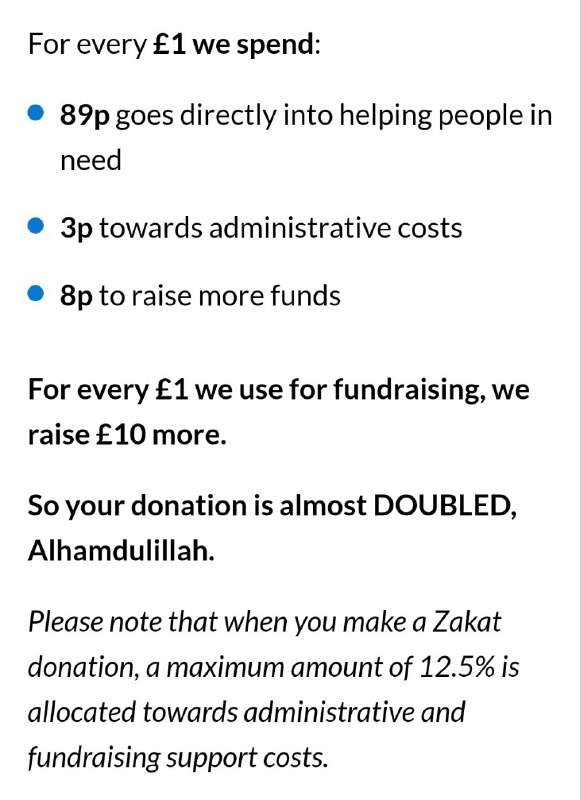
BENEFIT 347: Are charity organisations allowed to deduct a portion of donations to pay employee salaries and generate additional funds under the justification of {العاملين عليها}?
Sheikh Ibn ’Uthaymeen (may Allāh have mercy on him) said:
«(وَالْعَامِلِينَ عَلَيْهَا): هم الذين أقامهم الإمام، أي ولي الأمر، لقبض الزكاة ، وتفريقها فيهم. وهم عاملون عليها، أي: لهم ولاية عليها»
"{Those employed for it} These are the individuals appointed by the Imam, that is, the ruler, to collect and distribute the zakat. They are considered workers over it, meaning they have authority over it." [Liqa' al-Bab…
Al-‘Izz ibn ‘Abdis-Salām, in his discussion of legal maxims, elaborates on this principle:
«من ملك التصرف القولي بأسباب مختلفة، ثم صدر منه تصرف صالح للاستناد إلى كلِّ واحد من تلك الأسباب، فإنَّه يُحمل على أغلبها. فمن هذا تصرف النبي ﷺ بالفتيا والحكم والإمامة العظمى، فإنَّه إمام الأئمة، فإذا صدر منه تصرُّف، حُمِل على أغلب تصرفاته، وهي الإفتاء، ما لم يدل دليل على خلافه»
"If a person holds a position of authority that allows them to act for multiple reasons, and they issue a ruling that could be attributed…
BENEFIT 346: Understanding the context and nature of the Prophet’s ﷺ actions
The Prophet ﷺ acted in various capacities—he was:
1) a Messenger,
2) a Mufti (jurist),
3) an Imam (ruler),
4) a Judge, and
5) a human being.
Each of these roles has distinct implications in the Shari'ah. Therefore, it is crucial to determine the nature of the action being used as a source of deduction to ensure correct application.
[الفروق للقرافي (1/206) والإحكام في تمييز الفتاوى عن الأحكام للقرافي…
Now read the fatwa on this link ⤵️
https://t.me/madrasatuna/1533
FACT: Unlike the divine texts—the Qur'ān and the authentic Sunnah—which are free from any real contradiction, human speech, including that of scholars, is not infallible and may contain inconsistencies. A scholar’s opinions on a single issue may vary due to different considerations of preference that emerge over time, as well as changing circumstances…
BENEFIT 345: Setting scholars' fatwas against one another
Sheikh Sulayman Ar-Ruhaili وفقه الله states:
My dear brothers, first and foremost, the fatwa I issue—or that any other scholar issues—is based on what appears to be the correct view according to the evidence and the principles of the Shari'ah. It is not permissible, from a legal standpoint, to pit fatwas against one another. It is not acceptable for someone to seek my ruling on a matter and then later claim that…
BENEFIT 344: As charity organisations increase, so too the number of poor people...Ajeeb!
Abu Ēsa Ali Al-Afari hafidahullah said:
"Did Imam Ahmad ibn Hanbal introduce it (i.e. Charity Organisations)? Did Imam Muhammad ibn Idris Ash-Shafi'ee, Imam Malik ibn Anas, or Imam Abu Hanifa before him? Likewise, the scholars and leaders before them followed the same approach (i.e. They didn't have charity organisations).
Abu Bakr had wealth, yet he did not establish a charity organisation. Uthman had wealth,…
The poor individual has gone from being a caller to a beggar! And the Messenger ﷺ spoke the truth when he said:
“Every nation has a trial, and the trial of my nation is money.”
And look at these charity organizations of yours, those that are not allowed to operate except under certain stipulations: that they work under the Social Services' supervision; that they hold elections in them; that they keep their money in a ribaa-based bank. With all of this, the people of such organizations try to trick the people, saying: "Is…
Sheikh Muqbil ibn Hādī Al-Wādi’ē raḥimahullāh wrote in his introduction to the first print of 'Dhamm Al-Mas'alah':
“...There are two types of people who do not manage [wealth] properly:
The first are those businessmen who do not take proper care to spend it in the legislated causes...
The second: People who use thievery to aquire Zakāh, and once they collect it although are not legitimate recipients, they utilise it for their own personal needs. And what is even uglier than this is what a student of knowledge may do. He wastes…
Disclaimer 1: Asrar is an individual known for his innovation - this is not a promotion!
Disclaimer 2: The humming in the background is problematic!
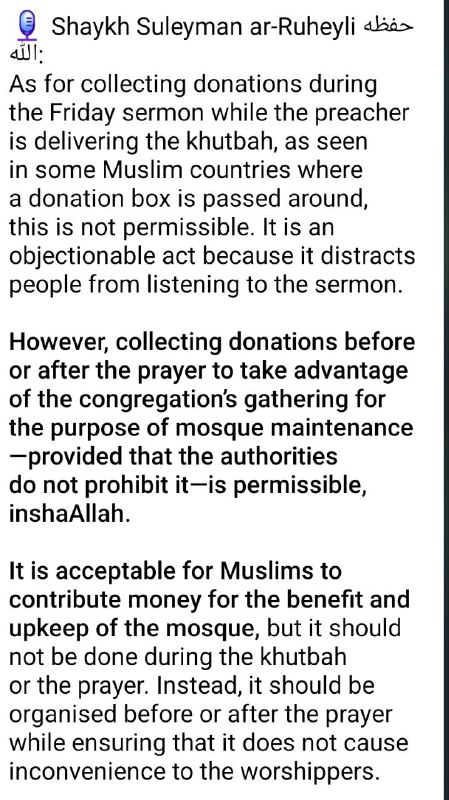
The purpose of sharing this clip is to highlight that begging under the pretext of "the masjid needs" is so bad that even people like him are speaking out about it!! Certainly, Salafees should be the most distant from such practices.
FOLLOW UP: Akhee, these evidences refer to people asking for themselves. It’s okay to ask on behalf of others, right?
Begging can be categorised into two types, and both are blameworthy:
First type: Directly begging for oneself.
For example: "Give me," "I need," etc.
This is clearly haram, and I’m sure we both agree on that.
Second type: Indirectly begging for oneself.
For example:
- Claiming "the masjid needs..." while being the Imam who will receive a salary from this collection.
- Saying "the village needs a…
Ruqyah?! That sounds a bit harsh, don’t you think??
Not at all! Begging is like a terminal illness—it makes a person accustomed to a life of humiliation in this world and leads to them standing before Allāh in the Hereafter with no flesh on their face.
Reflect on Sheikh ’Abdurrazzaq Al-Badr's speech (وفقه الله) ⤵️
"Whoever becomes accustomed to begging," if he does not take the initiative early on to restrain himself and firmly prevent himself from asking, he may…
RECOMMENDATION: 'Fiqh As-Siyam' should be taught in Sha‘bān in preparation for Ramaḍān, while 'Dhamm Al-Mas’alah' should be read during Ramaḍān as a Ruqyah for those engaged in begging.
A few years ago, Sheikh Muḥammad Bā Jammāl, a student of Sheikh Muqbil, taught his book "The Blameworthy Nature of Begging" during the month of Ramaḍhān. While this may seem like an unusual choice, considering the widespread prevalence of begging during Ramaḍhān, it was a wise decision to warn people against this degrading practice.
The Sheikh covered the book in 19 sessions. Here is the link to the first lesson:…
The Blameworthy nature of begging | authored by Sheikh Muqbil raḥimahullāh
Sheikh Yusuf Al-Jazaa'iri ḥafidhahullāh said: "This book serves as a ruqya for those afflicted with this issue (of begging)" ⤵️
https://t.me/ruqyachannel/149