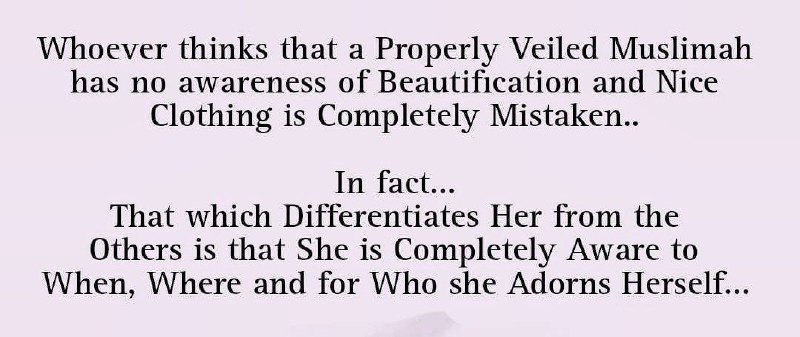
Can a woman adorn herself for potential suitors?
Sheikh Abu Bakr Al-Hammadi states:
I say: The fundamental basis for the permissibility of this matter is what was narrated by Al-Bukhārī (no. 3991) and Muslim (no. 1484), through the chain of Ibn Shihāb, who said: ʿUbaydullāh ibn ʿAbdillāh ibn ʿUtbah narrated to me that his father wrote to ʿUmar ibn ʿAbdillāh ibn Al-Arqam Az-Zuhrī, instructing him to visit Subayʿah…
Can I show my hair to my potential suitor during the marriage meeting?
Question: If a young man comes forward to propose marriage to a young woman, must he see her? And is it permissible for the woman to uncover her head in order to show her beauty more to her suitor?
Shaykh Ibn Bāz rahimahullāh said:
There is no harm in that, though it is not obligatory. It is recommended that he see her and that she see him,…
Question: The woman asking the question also says: I have neighbours from Ahlus-Sunnah, and my husband hates them. I have not seen any harm from them; rather, the harm comes from him, through insulting them and harbouring bad suspicions about them. Now he prevents me from going to them and visiting them, and from taking anything that comes from them, or from giving them anything, or lending them anything even…
Protect Children from Sexual Abuse
🚨 What Is Sexual Abuse?
Sexual abuse refers to any act of a sexual nature imposed on a child or adolescent without their consent. It may be committed by an adult or by another child. Sexual abuse falls into two main categories:
🔴 First Type: Physical Contact
This includes inappropriate kissing, improper hugging, touching a child’s private parts, or attempting to engage in…
Some opponents of polygyny are not driven by emotion alone, but by negative experiences they or those close to them may have endured. This is understandable, as such experiences may be their only exposure to polygyny. What is not acceptable, however, is directing that negativity toward the Shari‘ah itself or toward couples who wish to practice polygyny in accordance with the Shari‘ah.
Please take a read ⤵️…
He Promised Not to Take Another Wife — What If He Breaks That Promise?
If a husband promises his wife that he will not marry another woman, but later breaks that promise and enters into another marriage, then he has committed a sin by breaking his word. A believer is commanded to honour his promises, and it was wrong for him to make such a commitment in the first place if he was unsure of fulfilling it.
However,…
The Prophet ﷺ did not allow ʿAli (may Allāh be pleased with him) to take a second wife!
This narration is frequently cited whenever the topic of polygyny arises. The incident itself is authentic; however, important context is often omitted.
Thus, the question that arises: How do we reconcile between the clear legality of polygyny in Islam and the Prophet ﷺ prohibiting ʿAli ibn Abī Ṭālib from marrying a second…
A Muslimah is not Anti-Polygyny
Some women are overtaken by their emotions and begin uttering vile statements when other sisters wish to practice polygyny, or even when polygyny is discussed. Why?
Don't you know dear sister that it is not permissible for a muslimah, especially a salafiyyah, to behave like this?
Don't you know that we must have faith in and be content with the Sharīʿah of Allāh, the Majestic, the…
Performing Ghusl Without Undoing Hair
Question: Is it permissible for a wife to perform ghusl from major ritual impurity (janābah) without washing her hair?
Sheikh Najeeb Ash-Shar’abi ḥafidhahullāh:
What is obligatory in ghusl—whether from janābah, menstruation, postnatal bleeding, or any other obligatory bath, as well as in recommended baths—is to encompass the entire body and to ensure that water reaches all of…
The Practice of Head Shaving
Question: Is shaving the entire head with a razor, such that no hair remains, outside of ḥajj and ʿumrah considered an imitation of the Khawārij?
And should one object to a person who does this?
Shaykh Najeeb Ash-Shar’abi ḥafidhahullāh:
Shaving the head is a prescribed act of worship that is obligatory in ḥajj and ʿumrah, by explicit textual evidence and scholarly consensus.
It is…
Touching one's private part and its effect on wuḍū
Question: Does touching the private part of a child invalidate wuḍūʾ? And what is the authenticity of the ḥadīth of Busrah bint Ṣafwān, in some wordings of which it is reported that she heard the Messenger of Allāh ﷺ “commanding wuḍū due to touching the private part”?
Sheikh Rashād Adh-Dhali'ee ḥafidhahullāh:
This issue is based upon two prophetic traditions,…
I saw my mother’s hair while she was in a state of wuḍū; is her prayer valid?
Sheikh Abdulḥamīd Az-Zu'kari hafidahullāh:
We are not aware that looking at hair—whether hair or anything else—to be among the acts that invalidate ablution. Even if you were the one looking, how could your looking invalidate your mother’s wuḍū?
As for a woman praying with her hair uncovered, it is preferable for her to avoid that, and…
Does vaginal discharge invalidate wuḍūʾ?
Sheikh Abdulḥamīd Az-Zu'kari hafidahullāh:
Yes, it does invalidate wuḍū, unless it is continuous and uncontrollable—meaning it does not stop, or she has no ability to prevent it. In that case, her ruling is the same as that of a person suffering from chronic incontinence (ṣāḥib As-salis): she performs ablution and prays, and whatever is discharged after her wuḍū does not…
Does a Woman’s Wuḍū Become Invalid if While Washing Her Child She Touches Their Private Parts?
Scholars differ, may Allāh have mercy on them, regarding whether wuḍū is invalidated by touching the private parts of a child.
1⃣. First Opinion: wuḍū is invalidated by touching the private parts of a child, just as it is by touching those of an adult.
Ibn Qudāmah raḥimahullāh said: “According to the narration that wuḍū…
The Enmity of Wives and Children
The enmity of wives and children mentioned in the Qur'ān — “Indeed, among your wives and children are enemies to you, so beware of them” — is not enmity in the sense of hatred or hostility, as some may misunderstand. Rather, as Ibn Al-Qayyim explains in his ‘Uddah (p. 64):
“It is the enmity that stems from love, which prevents one from performing duties toward Allāh — such as…
This ultimately led to her father offering her in marriage to Mūsā (peace be upon him), as Allāh ﷻ says: “Indeed, I wish to marry you to one of these two daughters of mine…” [Al-Qaṣaṣ 28:27]
Any direct communication should remain within clear limits—avoiding khalwah and ensuring that any interaction is purposeful, restrained, and not excessive.
Lastly, regarding the claim that this is an innovated approach, I strongly recommend reading this post ⤵️
https://t.me/MarriedToYemen/212
To Share or Not to Share Marriage Profiles: A Friendly Discussion
🚫 Opponent: The Prophet ﷺ did not teach us to write marriage profiles and circulate them. None of the women among the Sahābiyyāt did so.
✅ Supporter: Did women not present themselves directly to the Prophet ﷺ?
🚫 Opponent: Yes.
✅ Supporter: Which would be considered more immodest—presenting a general profile in writing to potential suitors, or presenting oneself directly and physically to a suitor?
🚫 Opponent:…