Sheikh Yūsuf Al-Jazaa’iri hafidahullāh says:
Look at the Manhaj of the Salaf; Imam Ahmad, may Allāh have mercy on him, considered Isma'il ibn 'Ulayyah and Ya'qub ibn Shaybah innovators, despite them being imaams. Ya'qub ibn Shaybah had a unique collection called "Musnad Al-Mu'allal," which, if it still existed, would surpass this room in width. A huge collection. If you look at his biography in "Siyar A'lam…
Question: Is it true that Ḥusayn ibn ʿAlī Al-Karābīsī made the statement of the lafdhiyyah:
لفظي بالقرآن مخلوق
“My utterance of the Qur'ān is created”? And if that is true, did he later retract it?
Sheikh Abu Bakr Al-Hammadi hafidahullah:
He was indeed the one who introduced this; that is, Al-Karābīsī was the first to make this statement, and no one else preceded him in it. Rather, he was the one who introduced…
Questioner: Adh-Dhahabi – may Allāh have mercy on him – said: "When a great scholar's correctness is abundant, his pursuit of the truth is known, his knowledge is much, his intellect is evident, his righteousness, piety, and adherence to the correct path are recognised, then his mistakes are forgiven, and we do not declare him to be misguided, discard him, or overloo his merits. Yes, we do not follow him in his…
(1) Either we say that their criticism and mere jarḥ, devoid of any mention of good traits, is based upon truth, justice, sincerity, knowledge, piety, fear of Allāh, the Lord of the worlds, and a desi
By affirming this view, the innovated and newly invented methodology of mandatory balancing between good and bad traits collapses entirely.
Or (2) it must be said that their criticism—being devoid of any mention of good traits and focusing solely on faults—is based on injustice and oppression, and that their methodology is based on deception, ignorance, and a lack of piety and fear of the Lord of the worlds, and…
Watering Down of Jarḥ by Dismantling the Principles Set by the Salaf (Part 13)
Sheikh Abdulḥamīd Az-Zu'kari hafidahullāh wrote:
[From the innovated principles]
The methodology of Al-Muwāzanah (mentioning both good and bad qualities when criticising/refuting mistakes)
The claim of the Manhaj of Al-muwāzanah—that one must mention both the good and bad qualities—is a reprehensible innovation which leads to watering down the religion and complacency regarding the people of falsehood. As the…
Watering Down of Jarḥ by Dismantling the Principles Set by the Salaf (Part 12)
Sheikh Abdulḥamīd Az-Zu'kari hafidahullāh wrote:
Their Call to Mercy, Compassion, and Having a Clean Heart Towards Muslims
This is among the methods employed by Hizbis and those who water down the religion. They claim that the enemies of Islam are many—such as the Jews and Christians—so our enmity should be directed toward them. This, in itself, is correct: we are indeed obligated to hate and warn against the Jews…
Rather, he accepts all of that—unless it the adherenct to that madh-hab is speaking to promote his innovation, or he belongs to a madh-hab that does not deem lying to be blameworthy, as is the case wi
It is therefore obligatory to accept the report of a trustworthy narrator, as has been previously clarified.
Jarḥ must not be driven by personal desire or self-interest, but rather must be carried out as a matter of religious duty and in protection of the upright manhaj. It should be undertaken by those qualified for it. Declaring someone an innovator, a sinner, or a disbeliever is not the role of students or…
Watering Down of Jarḥ by Dismantling the Principles Set by the Salaf (Part 11)
Sheikh Abdulḥamīd Az-Zu'kari hafidahullāh wrote:
[From the innovated principles:]
Blind-following in the affair of Jarḥ wa Taʿdīl
Ash-Shawkānī said in Adab At-Ṭalab (p. 158):
"Among the causes that prevent fairness is blind-following in the science of jarḥ wa taʿdīl—especially when there is fanaticism from those who write in this field, as the intelligent observer often finds. For when one who is afflicted with…
(1) Reflect:
روى ابن عساكر في تاريخ دمشق بسنده عن عقبة بن علقمة قال: «كنتُ عند أرطأة بن المنذر فقال بعض أهل المجلس: ما تقولون في الرجل يجالس أهل السنة ويخالطهم؛ فإذا ذُكر أهلُ البدع قال: دعونا من ذكرهم لا تذكروهم؟ فقال أرطأة: "هو منهم لا يلبس عليكم أمره"، قال: فأنكرتُ ذلك من قول أرطأة، فقدمتُ على الأوزاعي وكان كشَّافاً لهذه الأشياء إذا بلغته!، فقال: "صدق أرطأة، والقول ما قال، هذا ينهى عن ذكرهم، ومتى يُحذروا إذا لم…
Watering Down of Jarḥ by Dismantling the Principles Set by the Salaf (Part 10)
Another innovated principle:
التحذير من منهج الشخص لا من الشخص نفسه
"Warn against the manhaj, not the individual himself"
As if these false ideologies arise and exist independently, without being upheld by individuals who defend them, show allegiance and hostility on their basis, and actively promote them!
Question: Is it permissible to mention the name of an innovator when refuting them, or is it sufficient to…
Watering Down of Jarḥ by Dismantling the Principles Set by the Salaf (Part 9)
Another innovated principle:
عدم تأثير مخالفة المنهج إذا صحت العقيدة
Differing in issues of manhaj bears no effect if we share the same Aqeedah.
Sheikh Abdulḥamīd Az-Zu'kari hafidahullāh wrote:
This is a malicious and divisive principle propagated by the new Hizbi groups such as the Sururiyyah and Qutbiyyah. They claim, "We believe that Allāh is above the heavens, and that Allāh will be seen on the Day of…
Watering Down of Jarḥ by Dismantling the Principles Set by the Salaf (Part 8)
Among the innovated principles is the notion of:
«لا يلزمني»
"I am not obliged", meaning that if some scholars declare an individual—whether a da'ee, a student of knowledge, or otherwise—to be an innovator, Al-Halabi and his likes assert that they are not bound to accept this judgment.
Sheikh Rabeeʿ may Allāh preserve him said:
“If two scholars – whether in the field of Jarḥ and Taʿdīl or otherwise – differ over…
Watering Down of Jarḥ by Dismantling the Principles Set by the Salaf (Part 7)
Sheikh Abdulḥamīd Az-Zu'kari hafidahullāh wrote:
[From the innovated principles is] Their Saying:
«كلام الأقران يطوى ولا يروى»
"The Criticism of Peers is to Be Folded and Not Narrated"
This phrase was said by Adh-Dhahabī, may Allāh have mercy on him, as he mentioned in Siyar A‘lām An-Nubalā’ (10/94):
«كلام الأقران إذا تبرهن لنا بهوى وبعصبيَّة لا يلتفت إليه بل يطوى ولا يروى»
"The words of peers, when proven to…
conflicting hadiths or indications. However, the correct view is to give precedence to the jarḥ, as we have mentioned, because the precedence of jarḥ is due to its containing information that is hidde
As-Sakhāwī said something similar to this: "In this case, the statement of the critics takes precedence over that of those praising, even if the number of those who praise is greater than the critics. Even if there is only one critic and many who praise, the decisive argument lies in clear proofs and evidences, with the Salafis and their opponents. However, it is stubbornness and obstinacy." [Fath Al-Mughīth]…
Watering Down of Jarḥ by Dismantling the Principles Set by the Salaf (Part 7)
Sheikh Abdulḥamīd Az-Zu'kari hafidahullāh wrote:
Among These (innovated) Principles: Rejecting the Explained Criticism (Al-Jarḥ Al-Mufassir)
The Manhaj of Ahlus Sunnah wal Jamāʿah is to give precedence to explained Al-jarḥ Al-mufassir over taʿdīl.
Al-Khaṭīb Al-Baghdādī (may Allāh have mercy on him) said:
"'Chapter on jarḥ and ta’dīl when both are combined: which takes precedence?' The scholars have agreed that…
Watering Down of Jarḥ by Dismantling the Principles Set by the Salaf (Part 6)
Sheikh Abdulḥamīd Az-Zu'kari hafidahullāh wrote:
Among These (innovated) Principles:
لا نقبل الجرح حتى يجمعوا عليه
“We Do Not Accept Criticism (Jarḥ) Unless There Is Consensus Upon It”
This principle, though popularised by Al-Ḥalabī and frequently emphasised by him, was actually stated in the presence of Sheikh Rabīʿ (may Allāh preserve him), who rejected it. Nevertheless, Al-Ḥalabī later documented its content…
Watering Down of Jarḥ by Dismantling the Principles Set by the Salaf (Part 5)
Sheikh Abdulḥamīd Az-Zu'kari hafidahullāh wrote:
Abolishing the Manhaj of Testing People
This is a sound manhaj supported by the authentic Sunnah of the Messenger of Allāh ﷺ.
In Sahih Muslim (78), from the hadith of ʿAlī (may Allāh be pleased with him):
((إِنَّهُ لَعَهْدُ النَّبِيِّ الأمي إلي: ألّا يحبني إلا مؤمن، وَلَا يُبْغِضَنِي إِلَّا منافق)).
"Indeed, it is the covenant of the unlettered Prophet to me:…
Watering Down of Jarḥ by Dismantling the Principles Set by the Salaf (Part 4)
Sheikh Abdulḥamīd Az-Zu'kari hafidahullāh wrote:
Among them (i.e. innovated principles) is the rejection of the report of a trustworthy person and casting doubt upon it.
This principle was promoted and spread by Abul Ḥasan Al-Miṣrī, who claimed that he does not accept criticism (of an individual) unless he personally investigates it. The scholars have refuted this invalid principle.
Allāh the Most High says:
{…
Watering Down of Jarḥ by Dismantling the Principles Set by the Salaf (Part 3)
Sheikh Abdulḥamīd Az-Zu'kari hafidahullāh wrote:
The Claim That Changing Times and Consideration of Interests Affect the Ruling on Abandoning Innovators
Sheikh Ibn ʿUthaymīn (may Allāh have mercy on him) said in Sharḥ Al-Uṣūl min ʿIlm Al-Uṣūl (p. 462):
"If someone says: 'This Islamic religion is a comprehensive, general, and flexible religion, suitable for every time and place,' we say: This is true. However,…
Watering Down of Jarḥ by Dismantling the Principles Set by the Salaf (Part 2)
Sheikh Abdulḥamīd Az-Zu'kari hafidahullāh wrote:
لا نجعل خلافنا في غيرنا سببا للخلاف بيننا:
Let Us Not Allow Our Differences Regarding Others Become a Cause of Division Among Ourselves:
This is one of the innovated principles introduced by ‘Ali Al-Halabi—may Allāh guide him (this book was authored before he passed away)—which he promoted in his book “The Manhaj of the Salaf in Weighing Benefits and Removing Harms…
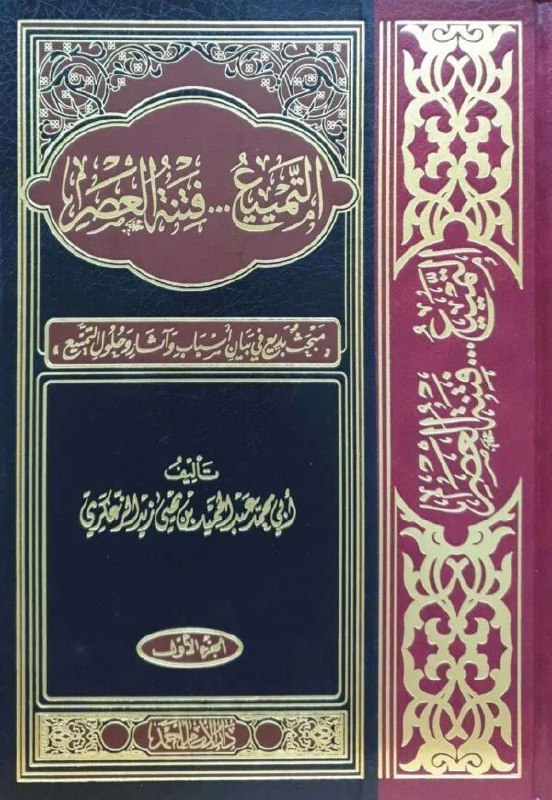
BENEFIT 420: Watering Down of Jarḥ by Dismantling the Principles Set by the Salaf (Part 1)
Sheikh Abdulḥamīd Az-Zu'kari hafidahullāh wrote:
It is well known that the noble Salaf—may Allāh be pleased with them—transmitted this religion to us as it was revealed by Allāh the Exalted and conveyed by the Messenger of Allāh ﷺ. They preserved it in their hearts, documented it in their writings, and established its foundational principles. Among these principles are the guidelines for jarḥ (criticism) against…
Meanwhile, the one who says, ‘Allāh the Almighty said’ — citing an Āyah in warning, upon the Manhaj of the Salaf, and warning against errors — even if they don’t openly refute him, they attempt to iso
Whoever follows the path of the Messenger of Allāh ﷺ in Al-jarḥ wa At-taʿdīl and in matters of creed, adherence, and calling to refute the people of desires, upon the way of his noble companions (may Allāh be pleased with them), and the way of the Tābiʿīn — the authors of those sound and reliable works — then such a person, insha Allāh, is most deserving of the description of that victorious group.
There were…
Sheikh Yahya, may Allāh preserve him, said:
"...We are in a time where Tamyee’ is encroaching upon the religion of Allāh Almighty. The current wave of Tamyee’ in various lands is not limited to the Sunnah alone — no, it extends further. Tamyee’ is affecting the religion as a whole. There are du'aat who seek to water down affairs in Allāh’s religion — leading it towards deviation, towards the concept of the…
Questioner: Virtuous Sheikh, we would like to ask about some banks that issue cards like Visa cards. Perhaps the concept is clear, but can I clarify it further O Sheikh?
Sheikh ’Uthaymeen: No (it's not clear), explain it.
Questioner: I mean, instead of the consumer dealing with shops using cash, he presents this card and takes the desired goods. Then, the amount is settled by the bank with which the client is…