▪️Who is Muhammad ibn Al-Hassan Ad-Diddu?
· He is an Islamic scholar from Mauritania.
· He is a leading figure associated with the Muslim Brotherhood.
▪️What are his beliefs?
· His ideology is described as a mix of the Muslim Brotherhood, Sufism, and the Ash'ari and Maturidi schools of Islamic theology.
· He is a member of the "International Union of Muslim Scholars," which is presented as an organisation…
As for the corruption in this claim made by this so-called Ad-Diddu, by Allāh, I would not have wished to refute him or write a response, were it not for one matter: that his followers allege he posse
His teacher spits into his hand and he wipes it upon his face from the remnants of his teacher! He even claims that Mount Uhud is a Companion because it “saw” the Prophet ﷺ and loved him, and that we are of the Tābi’īn because we “saw” Mount Uhud!
He narrates, by way of a weak Sufi report, that Abu Bakr (may Allāh be pleased with him), when reciting the Qur'ān, would emit from his liver the smell of roasted meat…
Sheikh Saleem Al-Hilali hafidahullah said:
"...This man, in recent days, has uttered statements which have been widely debated, with some opposing him and others defending him. In truth, many of our brothers and sons among the students of knowledge in various lands have already refuted him and clarified his errors, in the hope that he might return, repent, and seek forgiveness. Yet he has persisted, resisted, and…
He claimed that Mount Uḥud is a Companion, indeed he even says that none of the Companions remain except Mount Uḥud.
O Allāh, grant us safety! I do not know from where he brings forth such oddities.
This would necessitate saying رضي الله عنه for Mount Uḥud, and that any Muslim who saw it would thereby be considered a Tābiʿī.
He also claims that the smell of roasting meat would emanate from Abū Bakr Aṣ-Ṣiddīq,…
He claimed that taking “fees” from those performing ʿUmrah and Ḥajj is impermissible, and that this was never part of the history of Muslims.
● This is the statement of one who possesses neither Fiqh nor reason. There has never been a pilgrim to the Sacred House in times past except that he spent large sums of money during his pilgrimage to guarantee the “safety of the road” and to secure his “food and drink” for…
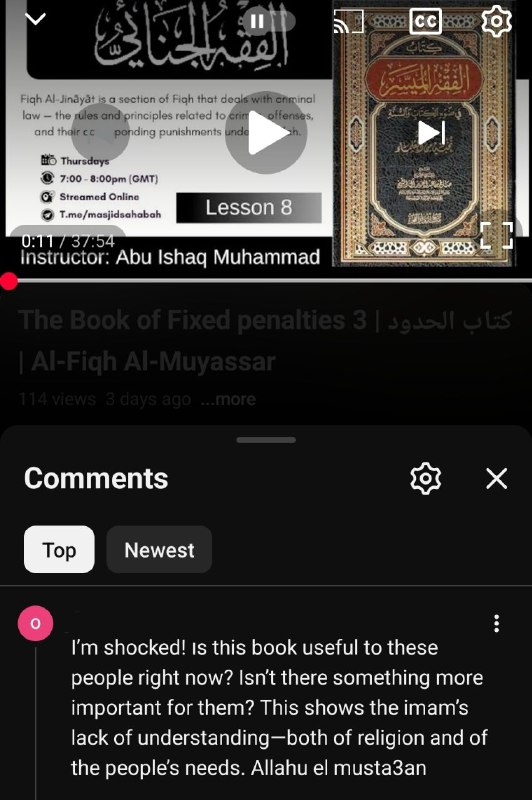
The Relevance & Importance of Studying Islamic Criminal Law
Fiqh Al-Jināyāt (Islamic criminal law) represents the final quarter of Fiqh studies and is a major branch that deals with justice, rights, and accountability. Studying it serves several crucial purposes:
1⃣. Comprehending the Sharīʿah in its entirety – Islam is not limited to acts of worship like prayer and fasting; it also provides guidance on governance, crime, and the protection of life, property, and dignity.…
Dr. ʿAbdullāh Aṭ-Ṭayyār said:
“One of my students—whom I trust completely—came to me and said: Shaykh Muḥammad ibn ʿUthaymīn was asked during a live program via telephone about a dream. A woman had called in and said: I saw someone circumambulating the Kaʿbah unclothed during the days of Ḥajj. The Shaykh replied: Give her glad tidings, for this indicates the forgiveness of her sins. Then the woman added: That…
BENEFIT 496: The Distinction Between Self-Promotion and Spreading Knowledge
Question: May Allāh reward you with goodness. The question is: how can we distinguish between assuming prominence in da‘wah — which scholars have warned against — and between spreading knowledge and goodness?
Sheikh Sulaymān Ar-Ruhaili hafidahullah:
Assuming prominence in da‘wah is when a person sets himself up as an authority: people refer back to him, he rules and judges, he warns against others and repels them,…
Ruling on Selling Permissible Items That May Be Used for Unlawful Purposes
Question: May one sell perfumes to women who are immodestly dressed?
Sheikh Sulayman Ar-Ruhaili hafidahullah:
I have stated repeatedly that items which are lawful in themselves, but which may be used for both lawful and unlawful purposes, may be sold by a Muslim on the basis of assuming good intent on the part of people. For example,…
BENEFIT 495: Ruling on Acts of Shirk Committed out of Ignorance
Question: If a person dies while committing acts of shirk with Allah, but was unaware that such acts constitute shirk—
for example, burning incense at the graves of saints seeking nearness to Allah—is this considered major shirk?
Similarly, is hanging charms (tamā’im) or placing salt at the doors considered acts of shirk?
And will a person who practiced these things abide eternally in the Hellfire?
If such acts…
قال الراغب الأصفهاني رحمه الله: «إذاعة السرِّ من قلة الصبر، وضيق الصدر، ويُوصَف به ضَعَفَةُ الرجال والنساء والصبيان». [الذريعة لمكارم الشريعة، للراغب الأصفهاني، ص: 212]
The Benefits of Guarding Secrets ⤵️
https://t.me/masjidsahabah/1001
The Harms of Disclosing Secrets ⤵️
https://t.me/masjidsahabah/1002
#Salafi_quotes #Beneficial_Quotes
Questioner: At our school now, we tell the children purely imaginary stories, but they contain educational lessons and may have religious benefit. Is this permissible or not?
Sheikh Albani raḥimahullāh:
It may—and I mean what I say—it may be permissible on the condition that it is understood and firmly impressed upon the student’s mind that it is a fictional story and not a factual reality. But to present…
▪️ “Loosen your hand with charity, and the ropes of calamity will be loosened from your neck. Know that your need for the reward of charity is greater than the need of the one receiving it.”
▪️ “If your heart thirsts, quench it only with the Qur'ān; if it feels lonely, comfort it only with the remembrance of the Most Merciful.”
▪️ “Do not say, ‘I succeeded,’ but say, ‘Allāh granted me success.’ Do not say, ‘I was right,’ but say, ‘Allāh guided me.’ Do not say, ‘I earned,’ but say, ‘Allāh provided for me.’”
▪️ “Whoever constantly glorifies Allāh, his face becomes radiant; whoever constantly praises…
It May Sound Appealing, but Verifying Before Sharing Is Always Best Practice
We may see students, and even well-known scholars, post statements attributing them to Ibn Al-Qayyim or Ibn Taymiyyah (may Allāh have mercy on them) without referencing their sources. Upon reflection and research, these sayings are neither theirs nor found in any of their writings. In fact, those who are familiar with their works (may…
Beware of Takhbeeb (Inciting Discord)
It was narrated by Abu Hurairah (may Allāh be pleased with him), that the Messenger of Allāh ﷺ said:
((ليس منا من خَبَّبَ امرأةً على زوجِها، أو عبدًا على سيِّدِه))
"He is not one of us who corrupts a woman against her husband, or a servant against his master." [Abu Dawood (2175); authenticated by Sheikh Albani in Ṣaḥīḥ Sunan Abī Dāwūd]
Takhbīb refers to the act of inciting…
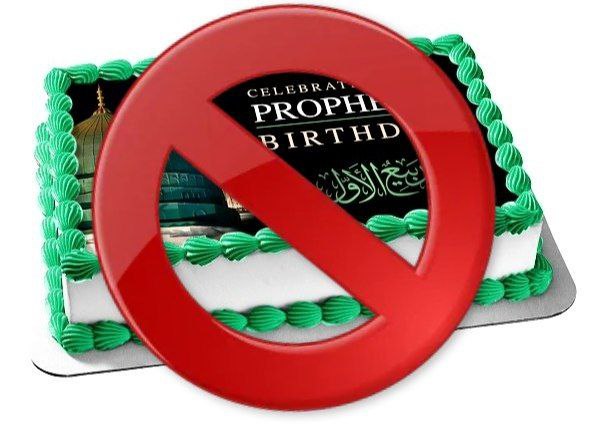
We don't celebrate the Prophet's birthday ﷺ because:
● There's not a single Āyah in the Qurʿān endorsing this celebration.
● There's not a single ḥadīth from the Messenger of Allāh ﷺ endorsing this celebration, whether authentic or inauthentic.
● There's not a single Athar from any of the Companions regarding this celebration, whether authentic or inauthentic.
● The Messenger of Allāh ﷺ did not celebrate it during his lifetime, nor did any of his Companions or…
قال الحسن البصري رحمه الله: «لا تزال كريما على الناس - أو لا يزال الناس يكرمونك ما لم تعاط ما في أيديهم؛ فإذا فعلت ذلك استخفوا بك وكرهوا حديثك وأبغضوك». [حلية الأولياء للأصبهاني]
BENEFIT: Though Allāh Is Not Seen in This Life, The Believers Will Surely See Him in the Hereafter
Imam Al-Baghawi rahimahullah explained:
"...The meaning of the Āyah is rather: “You shall not see Me in this worldly life, or at this moment,” for [Musa] was asking for the vision of Allāh in the present. The particle lan does not necessarily signify everlasting negation, as in His saying, “They will never wish for it (death), ever” (Qur’an 2:95), in reference to the Jews. Yet He later informed us that they will,…
![قال ابن تيمية رحمه الله: «ﻣﻦ ﺃﻋﻈﻢ ﺧﺒﺚ اﻟﻘﻠﻮﺏ: ﺃﻥ ﻳﻜﻮﻥ ﻓﻲ ﻗﻠﺐ اﻟﻌﺒﺪ ﻏﻞٌّ ﻟﺨﻴﺎﺭ اﻟﻤﺆﻣﻨﻴﻦ». [منهاج السنة ( ٢٢/۱)]](https://cdn4.telesco.pe/file/WNu5hiGP6koV0K0l7cUIyE1y2CGBnNjAtAkSF2B92aUldE7rxIUt5FMLOB0VK3mgzRkLz5nPctuToSpmDg0-MnNUcOkBsn8nViuyn-zxGFc9NxJDCXvHjNU60tiTJVAg2y4ZXA_nhVQr2KPT7dPaGy3VAj2AvXZEctI1444AHK4L9Cr6zrGWFqEVpZLoVwyGVz_85ADqWmSXw3IhXVYW2D-8tv6xBExpx6o-2G411QDHjtXQ5hemDkVaaGWGpXa_PxFAgPqdZNsAH2i9KwcmsN1HVho0E_tFhxkdr9l9hpK8Hx8nThTabaX_IIW9kReAb0GWN3SS_a0eUKsulP0yhg.jpg)

![قال الراغب الأصفهاني رحمه الله: «إذاعة السرِّ من قلة الصبر، وضيق الصدر، ويُوصَف به ضَعَفَةُ الرجال والنساء والصبيان». [الذريعة لمكارم الشريعة، للراغب الأصفهاني، ص: 212]](https://cdn4.telesco.pe/file/L106kT7JiO7Dp26py74-xjGItVVi_9AhZXGFGOAjZmi2JDb_g_cSA7Naw16HNRTuWhUcKGGA8csWSxiCKAD4e4Z65HJlWQn-0mqznPl_fcxSd3pcItoCMSLIwhuJMLJC4WRgWqeSuFQU3oel1u-cR7OMeoskASVc5XRYZdqdsS6EbMfdhpG2htea_0Zo9Ln-UHriUYcRK28iDhn1gPqO6n266hEvLR_xcuGhBLR63XLulcoh6biXqhpenIxIWPCNf5D_LGoNYEOEQnHGcA3ryUJ3RibLZlcRh56B5e96VDBMIBLg4Mnvq9zbsSGEaKU-BvWtmQPLtG5HQ081CHaDFw.jpg)

![قال الحسن البصري رحمه الله: «لا تزال كريما على الناس - أو لا يزال الناس يكرمونك ما لم تعاط ما في أيديهم؛ فإذا فعلت ذلك استخفوا بك وكرهوا حديثك وأبغضوك». [حلية الأولياء للأصبهاني]](https://cdn4.telesco.pe/file/p_K9LxJacS4Dfy775PfRmEEq943OSg7psl4ZnkfleZGeiGo6xSzXv7hCVe9M9g_jZBHIIGrT-9luLO-KoGoJbPpWIRgzf9dzq---ofGKs6HK7ZJznDS0iS6KoGq4jmCjYBuXx2eo9nxhN0_ehvR2IQpMFt4OtGOwkh0YbY5AcrIvGszY4Tw2P-zWGaCLSg3P7RIEDwahZEp8vVkxAnavbwgGOSlPthYE02YtUTp4GUoVCIrVgSuCvsGrGTScCe-bEHbO9nofP4xe_6tvlCznppxFEuseYWcXlhnlEXeoUkgg0PnTPhR5GGhCFivA0LdoFLpMheyL-8S8CMFb_hEBmg.jpg)